Les JCB 2023 ont eu lieu du lundi 30 janvier 9h au mercredi 1er février 12h.
Les exposés ont eu lieu dans l’amphithéâtre du LaBRI (Bâtiment A30) à l’Université de Bordeaux.
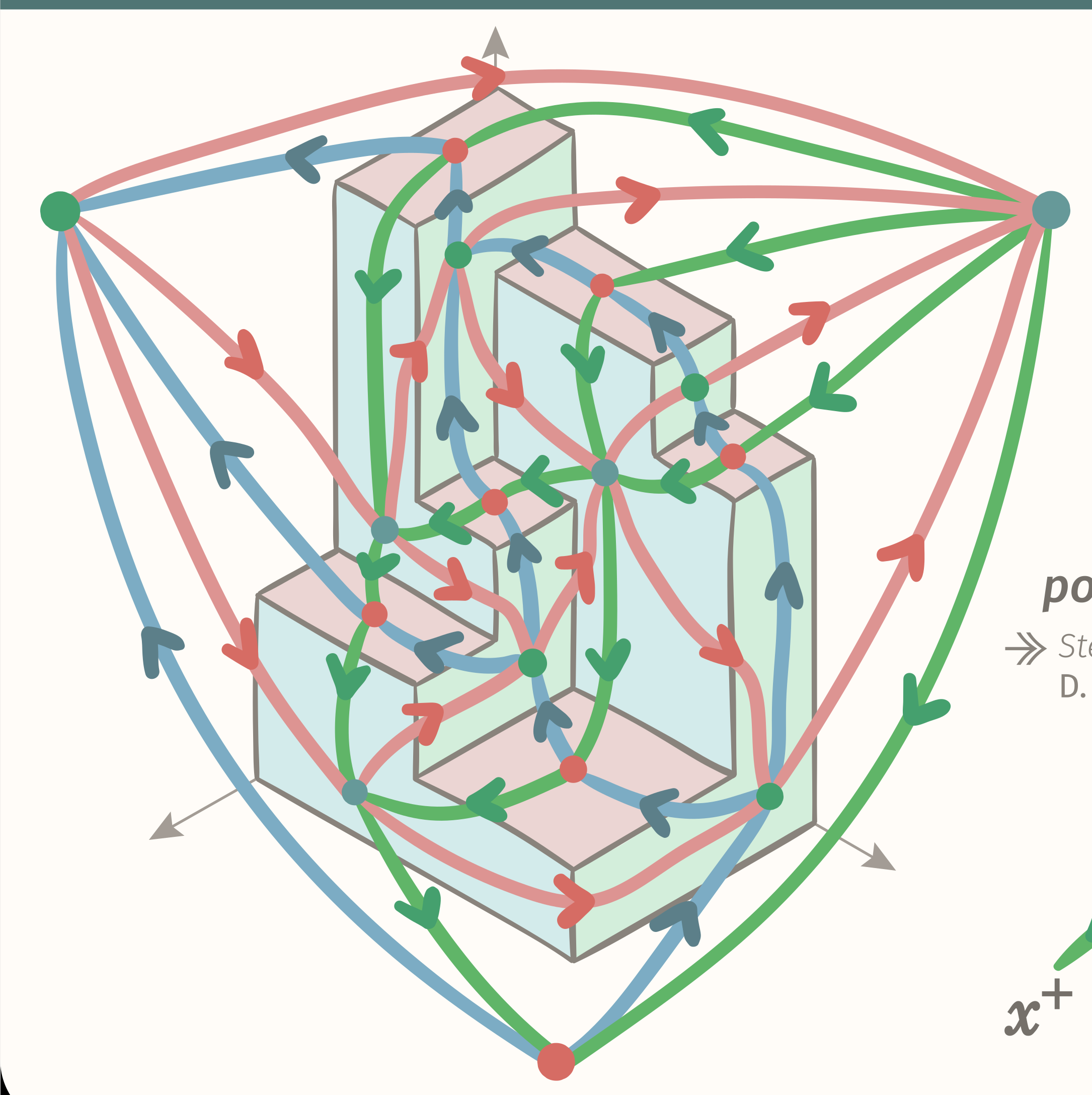
Figure : Erkan Narmanli

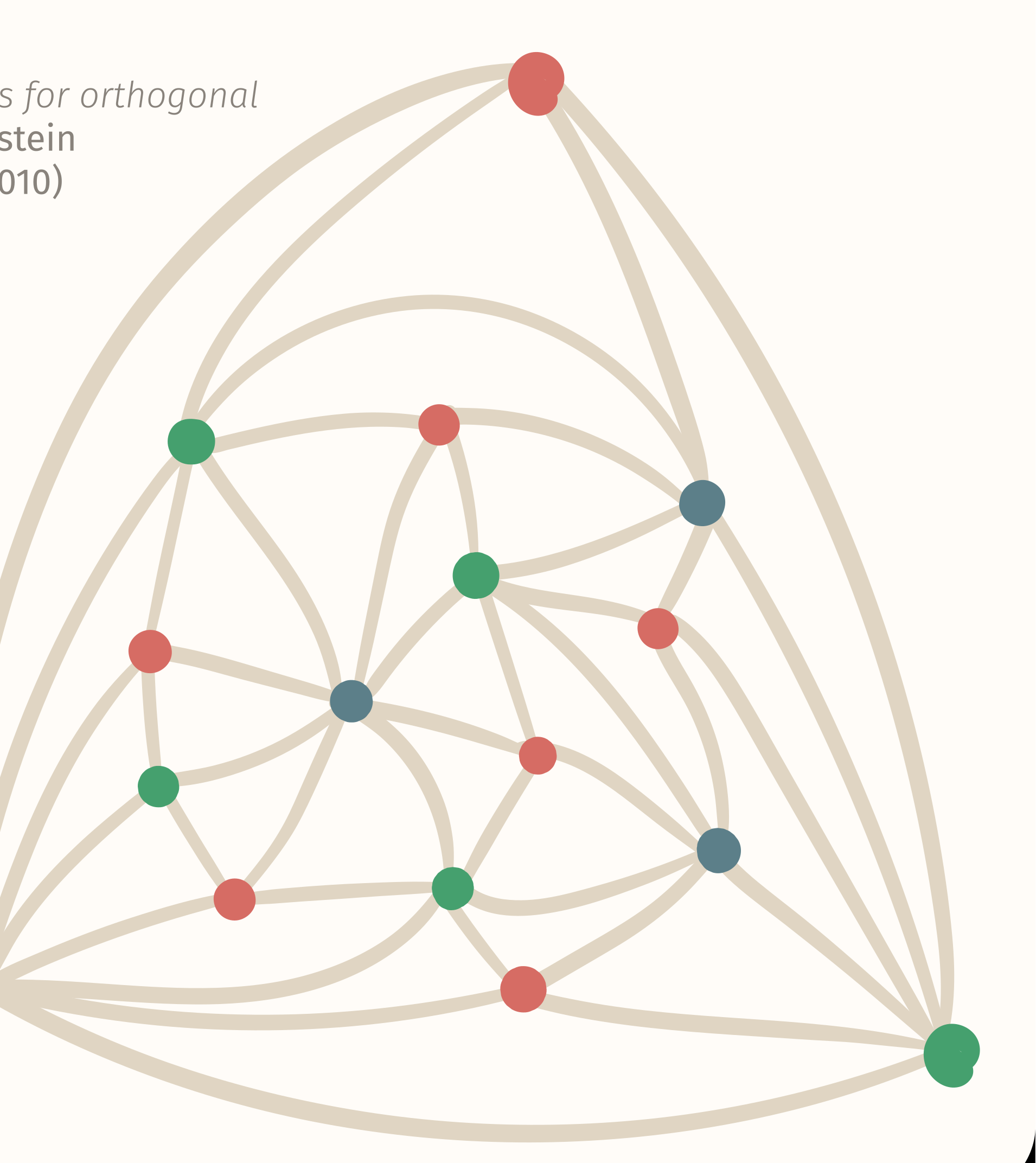
Figure : Erkan Narmanli
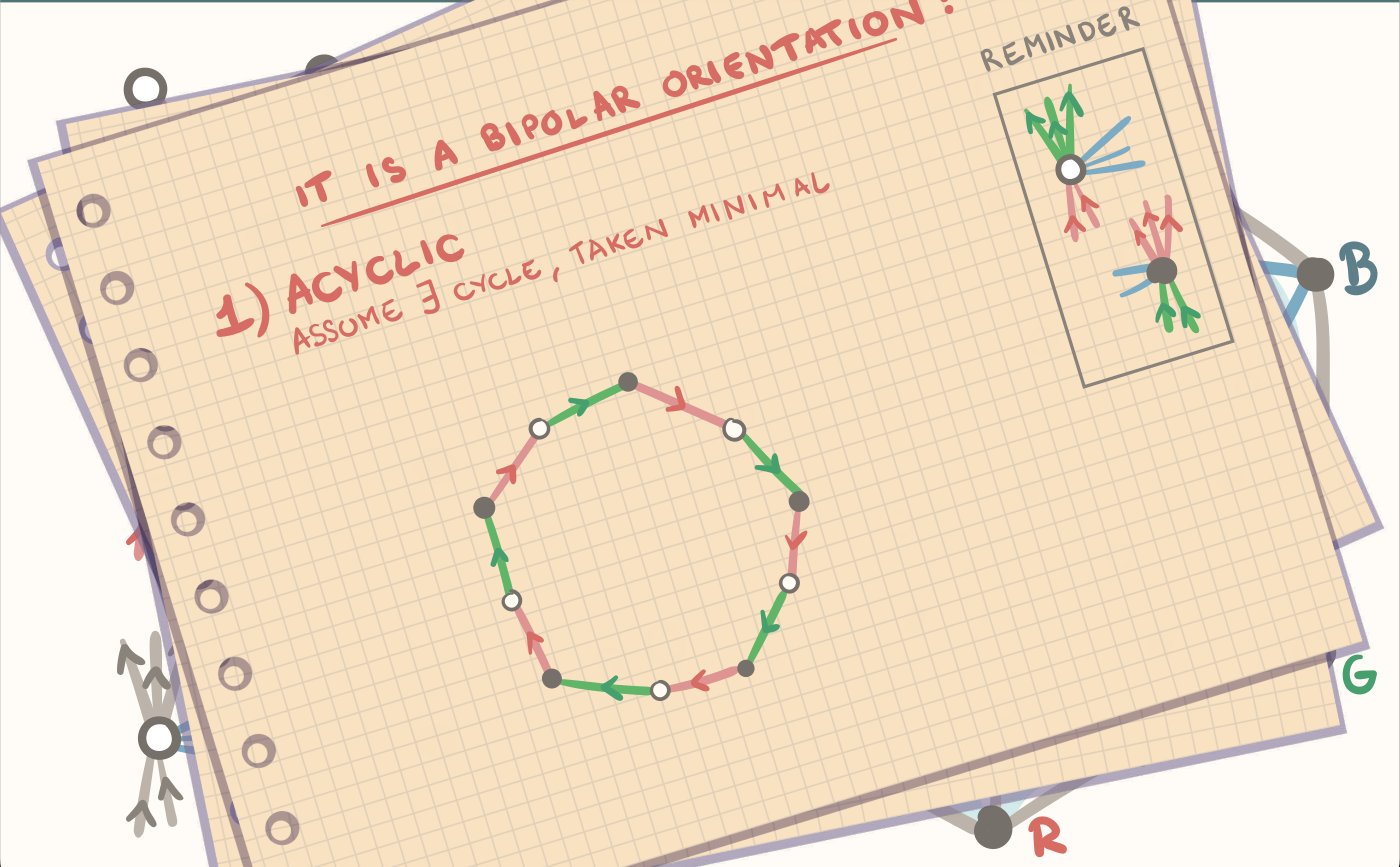
Figure : Erkan Narmanli
Orateurs et résumés
Accéder aux résumés au format pdf. Accéder aux présentations au format pdf.
- Doriann Albertin (LaBRI, Université de Bordeaux)
A quasisymmetric invariant for families of posets
Résumé
We focus on a quasisymmetric function associated to any poset: its P-partition enumerator. It’s definition follows naturally from the study of the oriented generalization of Stanley’s chromatic symmetric functions. It has been shown that P-partition enumerators distinguish naturally labelled posets among a variety of families, among which width 2 posets, rooted trees and series-parallel posets. More recently, Aval, Djenabou and McNamara proved it for the family of fair trees, which are not naturally labelled in general. We extend their ideas to a similar theorem for fair series-parallel posets.
This is a joint work in progress with J.-C. Aval and H. Mlodecki.
- Marie-Pierre Béal (IGM, Université Gustave Eiffel)
Symbolic dynamics and substitution shifts
Résumé
The talk will be divided into two parts. We first give some definitions and basic results of the area of symbolic dynamics. We explain the notion of conjugacy and state splitting. The decidability of conjugacy is an open problem.
In the second part, we study substitution shifts, that is sets of sequences obtained by the iteration of a morphism. We give recognizability results for such shifts. Recognizability is a form of injectivity of the morphism that allows one to uniquely desubstitute a sequence to another sequence which is traditionally required to be in the substitution shift. We also give several decidable properties of substitution shifts. The results are extended to
-adic shifts which are extensions of substitution shifts. This is a joint work with Dominique Perrin, Antonio Restivo and Wolgang Steiner.
- Margaret Bilu (CNRS, IMB, Université de Bordeaux)
Produits eulériens motiviques
Résumé
En théorie des nombres, de nombreuses fonctions, telle la fonction zêta de Riemann, peuvent s’écrire sous la forme d’un produit eulérien, c’est-à-dire d’un produit infini sur tous les nombres premiers. Je vais présenter une notion de produit eulérien de nature plus géométrique, en décrivant la combinatoire qui sous-tend cette définition ainsi que son lien avec un principe d’inclusion-exclusion géométrique. J’évoquerai également quelques contextes où ces produits apparaissent naturellement : par exemple, ils permettent d’approximer la “probabilité” qu’un polynôme à plusieurs variables de grand degré satisfasse des conditions de Taylor prescrites en tout point. - Julien Cassaigne (CNRS, I2M, Aix-Marseille Université)
Sur la complexité conjecturée de la suite d’Oldenburger-Kolakoski
Résumé
La suite d’(Oldenburger-)Kolakoski est la suite, à valeurs dans , telle que est la longueur du -ème bloc de symboles identiques dans . Dekking a conjecturé en 1981 que sa fonction de complexité , qui compte le nombre de mots finis de longueur dans , vérifiait , avec . Nous prouvons, sous l’hypothèse que l’ensemble des facteurs de est invariant par l’échange de et , que , et, sous l’hypothèse que et apparaissent dans avec la fréquence (un problème ouvert notoire), que pour tout . Enfin, sous des hypothèses un peu plus fortes, nous obtenons un équivalent plus précis que la conjecture de Dekking. - Séverin Charbonnier (Université de Genève)
A method to solve Tutte’s equations of higher degree
Résumé
Tutte’s procedure has shown to be a powerful method to derive recursive relations between generating functions of various models of maps. Often, those recursive relations are quadratic and are solved by Topological Recursion, a procedure developed by Chekhov, Eynard and Orantin. This procedure appears in various branches of mathematics such as integrable hierarchies or enumerative geometry. It allows to build relations between maps and those areas.
However, there are cases for which the Tutte’s relations are not quadratic anymore, but of higher degree. This is the case for ciliated maps and constellations for instance, and the proof of topological recusion becomes more involved.
I will expose a method to solve those kinds of higher degree Tutte’s equation and show that the generating functions satisfy topological recursion, focusing on the case of constellations.
Based on works and discussions with Valentin Bonzom, Guillaume Chapuy, Elba Garcia-Failde and Wenjie Fang.
- Manon Defosseux (MAP5, Université Paris Descartes)
A Pitman’s Theorem for a Brownian motion in an affine Weyl chamber
Résumé
A Pitman theorem proved in 1975 states that ifis a one dimensional Brownian motion, then is a three dimensional Besell process, i.e. a Brownian motion conditioned to remain forever positive. We will give a similar representation for a Brownian motion conditioned to remain in an affine Weyl chamber. We will explain how the Littelmann path model for representations of a Kac-Moody algebra leads naturally to this theorem. - Claire Hilaire (LaBRI, Université de Bordeaux)
Minor-universal graphs for graphs on surfaces
Résumé
In this talk, we study the idea of minor-universality. A graphis said minor-universal for a graph family if every graph of is a minor of . In other words, is a major of every graph of . A celebrate result of Robertson, Seymour and Thomas in 1994 shows that there is a -vertex planar graph, the grid, which is minor-universal for -vertex planar graphs. We find a similar result for the family of graphs with bounded genus: For every , there is a graph with genus and vertices that is minor-universal for the -vertex graphs of genus . This is a joint work with Cyril Gavoille. - Hugo Mlodecki (LaBRI, Université de Bordeaux)
Décompositions des mots tassés et auto-dualité de l’algèbre des fonctions quasi-symétriques en mots
Résumé
Grâce aux travaux de Foissy, on sait que toutes les algèbres de Hopf bidendriformes sont isomorphes à leur duales, en particulier WQSym. Durant ma thèse, j’ai montré comment construire un isomorphisme bidendriforme combinatoire explicite entre WQSym et sa duale. Pour ceci je représente deux décompositions récursives des mots tassés par des nouvelles familles combinatoires appelées forêts biplanes rouge et bleue. On obtient alors deux bases de WQSym et sa duale. L’intérêt de ces bases est qu’en prenant des sous-ensembles explicites, on obtient des bases d’éléments primitifs et totalement primitifs. Nous combinons soigneusement les forêts rouges et bleues pour obtenir des forêts bicolores. Une simple recoloration des arêtes nous permet d’obtenir le premier automorphisme bidendriforme explicite de WQSym. - Victor Nador (LIPN, Université Sorbonne Paris Nord et LaBRI, Université de Bordeaux)
The algebra of constraints for (some) weighted Hurwitz number
Résumé
Combinatorial maps and their generating function are a well-known object understood from several point of view. Its generating function can be expressed using random matrix techniques and it is known to satisfy an infinite tower of PDE which form a Virasoro algebra. Algebraically, maps can be seen as a set of three permutations whose product is the identity, i.e. as 3-Hurwitz numbers. This construction can be generalized to more general types of Hurwitz numbers, leading to combinatorial objects called constellations. Constellations are known to share some of the properties of the-matrix model, but the lack of a “naive” eigenvalue decomposition hinders their study. More sophisticated techniques from integrable systems (e.g. topological recursion) can be used to study these object, but a complete picture is still lacking. In particular, the constraints satisfied by their generating function are known, but their algebra is not. We will discuss some preliminary result in that direction for two particular types of constellations. - Erkan Narmanli (Institut Curie)
Énumération de carte décorées et marches dans le quart de plan
Résumé
Nous démontrons des résultats d’énumération exacts et asymptotique sur des familles de cartes décorées (par une coloration contrainte des sommets ou des arêtes, par une orientation, etc.). Pour y parvenir nous mettons en bijection les familles considérées avec des marches à grands et petits pas, contraintes à rester dans le quart de plan.
Notre méthode s’articule autour des orientations bipolaires planes, et on ramène les familles de cartes que l’on considère à ces orientation bipolaires avec éventuellement une décoration de leurs faces ou encore une contrainte sur leur taille. Ces orientations bipolaires nous servent alors d’objet pivot, et son ensuite traduites sous la forme de marches dites tandems et qui reste dans le quart de plan, à l’aide de spécialisation d’une bijection due à R. Kenyon, J. Miller, S. Sheffield, et DB Wilson.
À partir de ces marches tandems, il est possible d’obtenir les équations fonctionnelles qui régissent les séries génératrices induites. En découpant ces marches en marches à petits pas, on peut aussi obtenir des algorithmes en temps polynomial pour calculer les premiers termes des suites combinatoires associées. Enfin, à l’aide d’outils sur les marches aléatoires contraintes à rester dans un cône, on obtient des équivalents asymptotique de ces suites.
Ce travail nous permet notamment de démontrer la conjecture (2009) de Y. Inoue, T. Takahashi et R. Fujimaki sur le comportement asymptotique des structures transverses. On obtient des résultats similaires pour les posets plans comptés par sommets ou comptés par arêtes. Pour deux des modèles de cartes considérés, et qui sont en lien avec les représentations des polyèdres en coin, le processus est plus délicat et on arrive seulement à donner un taux de croissance exponentiel.
- Manon Stipulanti (Université de Liège)
Binomial
: coefficient, equivalence, and complexity Résumé
In combinatorics on words, for two wordsand , the binomial coefficient of and is the number of times appears as a (scattered) subword of . For example, with and , there are ways to select 3 letters among 6, but only of them give back . Generalizing famous binomial coefficients of integers, the word version has received a lot of attention within the combinatorics-on-words community. A few years ago, M. Rigo and P. Salimov introduced the notion of -binomial equivalence: two words and are -binomially equivalent if the binomial coefficients and are equal for all words of length up to . This is a refinement of the usual abelian equivalence and Simon’s congruence. Very naturally, one can then associate the corresponding -binomial complexity function which, for a given infinite word , maps to the number of length- factors of up to the -binomial equivalence relation. In this talk, I present a broad overview of the theory of binomial coefficients, equivalence, and complexities, focusing on some recent results obtained by J. Leroy, M. Rigo, M. Whiteland, and myself. - David Wahiche (ICJ, Université Claude Bernard Lyon 1)
Interprétations combinatoires des identités de Macdonald pour les systèmes de racines affines
Résumé
Entre 2006 et 2008, de nombreux travaux en théorie des représentations, théorie de jauge et combinatoire ont conduit à la découverte de la formule de Nekrasov-Okounkov, qui relie produit d’équerres de partitions d’entiers et des puissances de la fonction eta de Dedekind. En 2018, par deux méthodes différentes, Rains et Warnaar d’une part et Carlsson et Rodriguez-Villegas d’autre part ont montré un-analogue de cette formule, avec des applications en géométrie algébrique. Il se trouve que le cas peut s’obtenir en réécrivant l’identité de Macdonald pour le système de racines affines de type A. Le but de cet exposé est de montrer comment l’utilisation des partitions d’entiers vues comme des mots binaires bi-infinis permet de reformuler combinatoirement et de façon uniforme les identités de Macdonald pour tous les systèmes de racines affines infinis. J’expliquerai comment il est alors possible d’en déduire des formules de type q-Nekrasov-Okounkov pour tous ces types. - Harriet Walsh (ENS Lyon)
Transposition factorisations, high genus maps, and the Plancherel—Hurwitz measure on partitions
Résumé
We consider a new probability law on integer partitions, which is a deformation of the Plancherel measure. Its normalisation is an unconnected Hurwitz number, counting transposition factorisations on a symmetric group or equivalently certain unconnected maps. We study its asymptotic behaviour in a regime where the number of transpositions grows linearly with the order of the group and the corresponding maps are of high genus, and show that it gives rise to a two-fold limit shape, where the first part becomes much larger than the others. As a consequence, we obtain an asymptotic estimate for the unconnected Hurwitz numbers, which allow us to study the connectedness of a random Hurwitz map in this regime. Based on joint work with Guillaume Chapuy and Baptiste Louf (arXiv:2206.11315).
Emploi du temps
Lundi 30 janvier
| horaire | orateur | titre |
|---|---|---|
| 08h30 - 09h00 | accueil | |
| 09h00 - 10h00 | Manon Defosseux | A Pitman’s Theorem for a Brownian motion in an affine Weyl chamber |
| 10h00 - 10h30 | pause | |
| 10h30 - 11h30 | Séverin Charbonnier | A method to solve Tutte’s equations of higher degree |
| 12h00 - 13h30 | repas | |
| 14h00 - 15h00 | Marie-Pierre Béal | Symbolic dynamics and substitution shifts |
| 15h00 - 16h00 | Victor Nador | The algebra of constraints for (some) weighted Hurwitz number |
| 16h00 - 16h30 | pause | |
| 16h30 - 17h30 | Doriann Albertin | A quasisymmetric invariant for families of posets |
Mardi 31 janvier
| horaire | orateur | titre |
|---|---|---|
| 09h00 - 10h00 | David Wahiche | Interprétations combinatoires des identités de Macdonald pour les systèmes de racines affines |
| 10h00 - 10h30 | pause | |
| 10h30 - 11h30 | Margaret Bilu | Produits eulériens motiviques |
| 12h00 - 13h30 | repas | |
| 14h00 - 15h00 | Hugo Mlodecki | Décompositions des mots tassés et auto-dualité de l’algèbre des fonctions quasi-symétriques en mots |
| 15h00 - 16h00 | Manon Stipulanti | Binomial |
| 16h00 - 16h30 | pause | |
| 16h30 - 17h30 | Harriet Walsh | Transposition factorisations, high genus maps, and the Plancherel—Hurwitz measure on partitions |
Mercredi 1 février
| horaire | orateur | titre |
|---|---|---|
| 09h00 - 10h00 | Erkan Narmanli | Énumération de carte décorées et marches dans le quart de plan |
| 10h00 - 10h30 | pause | |
| 10h30 - 11h30 | Claire Hilaire | Minor-universal graphs for graphs on surfaces |
| 11h30 - 12h30 | Julien Cassaigne | Sur la complexité conjecturée de la suite d’Oldenburger-Kolakoski |
Participants
- Marie Albenque (IRIF)
- Doriann Albertin (LaBRI, Université de Bordeaux)
- Jean-Christophe Aval (LaBRI, Université de Bordeaux)
- Axel Bacher (LIPN, Université Sorbonne Paris Nord)
- Eric Balandraud (IMB)
- Louf Baptiste (IMB)
- Frederique Bassino (LIPN, Université Sorbonne Paris Nord)
- Margaret Bilu (IMB)
- Nicolas Bonichon (LaBRI, Université de Bordeaux)
- Pierre Bonnet (Labri)
- Valentin Bonzom (LIPN, Université Sorbonne Paris Nord)
- Mireille Bousquet-Mélou (LaBRI, Université de Bordeaux)
- Jérémie Bouttier (IPhT, CEA Paris-Saclay)
- Théophile Buffière (LAGA, LIPN)
- Pierre Béaur (LISN)
- Marie-Pierre Béal (LIGM Université Gustave Eiffel)
- Noémie Cartier (LISN)
- Julien Cassaigne (Institut de mathématiques de Marseille)
- Guillaume Chapuy (IRIF)
- Séverin Charbonnier (Université de Genève)
- Balthazar Charles (LISN)
- Robert Cori (LaBRI, Université de Bordeaux)
- Vincent Delecroix (LaBRI, CNRS)
- Enrica Duchi (IRIF)
- Philippe Duchon (LaBRI, Université de Bordeaux)
- Wenjie Fang (LIGM, Université Gustave Eiffel)
- Oscar Fontaine (Ecole Normale Supérieure PSL)
- Luis Fredes (IMB)
- France Gheeraert (ULiege)
- Elise Goujard (IMB)
- Olivier Guibert (LaBRI, Université de Bordeaux)
- Claire Hilaire (LaBRI, Université de Bordeaux)
- Mohamed Slim Kammoun (IMT)
- Florent Koechlin (LORIA)
- Savinien Kreczman (Université de Liège)
- Bastien Laboureix (LORIA, Université de Lorraine)
- Sébastien Labbé (LaBRI, CNRS)
- Yvan Le Borgne (LaBRI, Université de Bordeaux)
- Loïc Le Mogne (LISN)
- Clément Legrand-Duchesne (LaBRI, Université de Bordeaux)
- Théo Lenoir (CMAP)
- Camille Male (Institut de Mathématiques de Bordeaux)
- Chiara Mantovani (LIX - École polytechnique)
- Philippe Marchal (LAGA)
- Jean-François Marckert (LaBRI, Université de Bordeaux)
- Hugo Mlodecki (LaBRI, Université de Bordeaux)
- Ludovic Morin (LaBRI, Université de Bordeaux)
- Philippe Nadeau (CNRS et ICJ, Université Lyon 1)
- Victor Nador (LaBRI, Université de Bordeaux)
- Erkan Narmanli (Institut Curie)
- Eva Philippe (Institut Mathématiques de Jussieu - Paris Rive Gauche)
- Germain Poullot (Institut de Mathématiques de Jussieu)
- Martin Pépin (LIPN, Université Sorbonne Paris Nord)
- Antoine Renard (Université de Liège)
- Arthur Rodelet-Causse (LIGM)
- Julien Roupin (LIGM)
- Zéphyr Salvy (LIGM)
- Juliette Schabanel (École Normale Supérieure PSL)
- Gilles Schaeffer (LIX)
- Alexandros Singh (LIPN, Université Sorbonne Paris Nord)
- Andrea Sportiello (LIPN, Université Sorbonne Paris Nord)
- Pierre Stas (ULiège)
- Manon Stipulanti (Département de Mathématique)
- Daniel Tamayo Jiménez (LISN)
- Adrian Tanasa (LaBRI, Université de Bordeaux)
- Zoé Varin (LaBRI, Université de Bordeaux)
- David Wahiche (Institut Camille Jordan)
- Harriet Walsh (LAREMA, Université d’Angers)
- Ivan Yakovlev (LaBRI, Université de Bordeaux)
- Alexandre Zvonkine (LaBRI, Université de Bordeaux)
Organisateurs
- Vincent Delecroix
- Sébastien Labbé
- Auriane Dantès
- Isabelle Garcia
- Stéphanie Guiard-Schmid
- Magali Hinnenberger
- Elia Meyre
Soutien financier
Ces journées ont lieu grâce au soutien financier de
- LaBRI

- Bordeaux INP
- le GDR IM du CNRS
- les projets ANR CODYS, COMBINÉ et 3d MAPS